• The Plot: Twelve year old Lalani lives on the island of Sanlagita, in a village that is suffering from drought and an oppressive patriarchal structure. The village elders have long warned of staying away from Mount Kahana, the dangerous mountain on the island, as well as the beauty of Mount Isa, the mythical mountain across the sea that supposedly holds magic that could bring prosperity to Sanlagita. When misfortune provokes Lalani to explore the sides of Mount Kahana, she begins an adventure that will place her in conflict with her village and compel her to set sail across the distant sea in search of Mount Isa.

    My Take: This is a wonderful book because author Erin Entrada Kelly has a fine sense of pacing. She weaves in themes of oppression, sexism, and environmental degradation while also including elements of magic and mythology. There is also enough action and danger to satisfy adventure lovers. Kelly manages to pack all of this in while maintaining a sense of urgency throughout the story. She also daringly introduces new characters and settings in the 3rd act without slowing things down.

    I also credit Kelly with an appropriate level of world building. She gives the reader just enough information about the fantasy setting without overburdening us. She will, for instance, give a broad description of a fantasy animal, but leaves most of it to our imagination. This trust in the reader is a welcome departure from many other fantasy writers.

    One Interesting Note About The Author: According to her bio on her website, Erin Entrada Kelly’s favorite scary movie is Poltergeist (1982).
  • counting by 7s

    The Plot: Willow is a 12 year old girl who is fascinated by botany, languages, and prone to indulging in mathematical quirks like counting by 7’s. While possessing a genius intellect, she finds herself awkward around other people and generally at a loss for friends. When Willow’s parents pass in a traumatic accident, Willow faces the challenges of building a new life for herself – a monumental task for someone who does not do well with change. Fortunately Willow finds herself surrounded by a strange community of people that, even with her social awkwardness, she manages to touch.

    My Take: I loved this book. I admired how Goldberg Sloan moved from Willow’s first person narrative to other characters in 3rd person perspective. This allowed the reader to glimpse the story and Willow from other points of view. It also fleshed out all of the other interesting characters in the book. The school case manager Del Duke was a favorite of mine. A man of limited skills, stuck in a deep midlife rut, he finds his world changed by his encounter with Willow. We find him at the end of the book not necessarily more successful at being a human in the world, but at least more aware of his limitations.

    There are problems with this book. The character of Willow is SO intelligent, that it’s strains credulity. And the genius child and dead parents are staple tropes of kid and teen lit. Still, I was won over by the quirkiness of the characters and the author’s never giving in to the temptation of loading the narrative up with sentimentalism. The reader picks up on the idea that this book isn’t really about grief or mourning or even childhood brilliance. It’s more about building a community out of quirky people that may not even really like each other. Somehow it all works.

    One Interesting Note About The Author: According to her website, Holly Goldberg Sloan has also worked as a writer for the entertainment industry including writing the screenplay for eight films!

  • Book cover

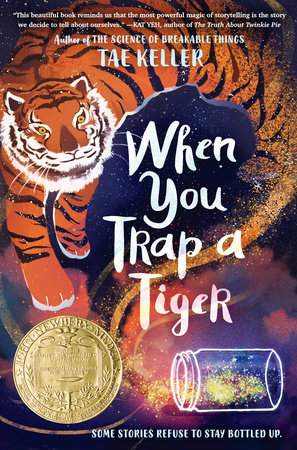
    The Plot: Lily, her mom, and older sister are moving to live with their Korean grandmother Halmoni in a small town. Halmoni has always been eccentric, but lately her strangeness has developed into seeing hallucinations and not recognizing familiar faces – all signs of possible dementia. Whatever the cause, Lily has also begun seeing mystical things, specifically a tiger that visits her and demands to hear lost stories from Korea. As Halmoni’s state of mind continues to slip, Lily finds herself engaging with the tiger to rediscover the stories in an effort to save her grandmother.

    My Take: After watching the Youth Media Awards, I was eager to read this year’s Newberry Medal winner. After finishing it, I can understand why the committee chose this book. Keller has deftly created a story about the intergenerational strength of women in the face of challenges from immigration, grief, and a country victimized by war. The core theme is a family dealing with the consequences of being second generation immigrants and sorting out what traditions they want to preserve from their home country. Lily is an interesting character because she is the inheritor of her grandmother’s legacy and love of Korean culture – an inheritance from which her mom and older sister have turned away. This tension between the 4 females is what drives the story forward. I highly recommend this novel to those looking for a read about resilient women and the power of storytelling.

    One Interesting Note About The Author: To write When You Trap A Tiger, Keller drew from the experiences of her own childhood when she listened to her halmoni tell her stories about ghosts and tigers at bedtime.

  • The Plot: Since the death of Coyote’s mother and two sisters in a car accident 5 years ago, 12 year old Coyote and her dad Rodeo have lived on a repurposed school bus traveling across the country to nowhere in particular. In a long distance phone call with her grandmother, Coyote learns that a park in her hometown is being bulldozed. Years before Coyote and her mom and sisters had buried a memory box in that park. Coyote vows to herself to travel and reclaim the memory box before it disappears underneath the bulldozers shovels. She must hide the true purpose of this cross country trek from Rodeo who cannot face his grief from the past.

    My Take: This book suffers from a protracted second act in which we are introduced to a host of supporting characters, each with an accompanying subplot that slows, rather than adds momentum, to the story. At least one of these characters could be removed with no loss of meaning to the book.

    I also at times found Coyote’s voice inauthentic due to her tendency to philosophize on life. She muses, for example, at one point that “you could be scared and sad and tough all at the same time, like I didn’t know that you could be a million different things all at the same time. There’s so much sadness in the world. Really, there is.” The author could have trusted the reader to draw these lessons from the story rather than having it told to us with such frequency.

    The story picks up in the 3rd and 4th acts as Coyote’s yearning to retrieve the memory box intensifies and Rodeo is forced to wrestle with his grief and his abandonment of his role as a father. Gemeinhart’s strongest writing occurs in the final chapters which put a lump in my throat. I truly felt for Coyote and her father at the end despite the long slog to get to this point. Readers can decide for themselves if it was worth it.

    One Interesting Note About The Author: According to Dan Gemeinhart’s website, he was a teacher-librarian for 13 years which, in my biased opinion, makes him a pretty awesome person!

  • List Of Things That Will Not Change book cover

    Title: The List of Things That Will Not Change

    Author: Rebecca Stead

    Publisher: Random House 2020

    The Plot: Ten year old Bea’s parents have recently divorced amicably and are now living in separate residences. Her father has come out as gay and will soon be marrying his boyfriend Jesse. While adjusting to these changes, Bea mostly has positive feelings about the upcoming marriage and is especially excited about meeting Jesse’s daughter Sonia who is also 10. As Bea adapts to the changing relationships in her life, she makes several decisions that create discord among her family.

    My Take: I found this book to be a strong middle grade realistic fiction read because Rebecca Stead captures the mix of feelings that many children of divorce experience. Instead of having Bea wallowing in hurt and grief over her parents split, Stead chooses the more interesting approach of allowing her to experience joy and excitement over the new lives that her parents are building. I also appreciated how Bea’s character changes in the reader’s mind over the arc of the story. We learn things about how her that make her more interesting. Stead should also be given credit for adeptly handling the issue of a gay parent without making it feel forced or contrived. The author nests the topic of gay marriage within the wider scope of the family and builds the book on believable characters. This credible presentation of a contemporary mixed family prevents “The List of Things That Will Not Change” from becoming simply an ‘issues’ book.

    One Interesting Thing About The Author: According to her website, Rebecca Stead’s parents, much like Bea’s, were divorced when she was growing up and had separate residences. No doubt Stead drew on these experiences when writing this book.

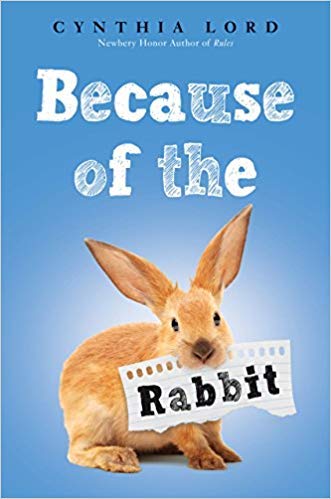
  • Because of the Rabbit

    Title: “Because of the Rabbit”

    Author: Cynthia Lord

    The Plot In 5 Sentences Or Less: Emma is going into 5th grade and she has decided that she no longer wants to be homeschooled. On the night before her first day at public school, her father the game warden brings home a rabbit that was stuck in a neighbor’s fence. Over the following days, Emma learns how to care for the rabbit and also that making friends in 5th grade is a more difficult task than she imagined. When a school project requires teaming up with some classmates, Emma learns the meaning of true friendship.

    My Take: This was a straightforward story about friendship and learning the many social pitfalls of 5th grade. In its tone and content, it really reminded me of The Year of Billy Miller by Kevin Henkes. There are no bad guys in this story, so Lord sidesteps many of the bully and mean girl tropes that populate most younger and middle grade chapter books. I also appreciated the character of Jack who suffers from ADHD and is quirky and sweet natured. All told, readers looking for a realistic fiction book for 3rd and 4th graders will be well pleased with this choice.

    One Interesting Note About The Author: One of Cynthia Lord’s inspirations for this story was her experience with rabbits. She has 3 pet bunnies and has also fostered twenty-six of them in the last few years!

  • Al CaponeDoesMyShirts

    Title: Al Capone Does My Shirts

    Author: Gennifer Choldenko

    The Plot In 5 Sentences Or Less: The year is 1935 and Moose Flannagan and his family have moved to the island of Alcatraz so that his father can work as a guard and maintenance man in the prison. Moose’s older sister Natalie suffers from cognitive disabilities and the family is hoping that a nearby school will be able to improve her condition. As Moose adjusts to life on the island and at his new school, he struggles to find someone to play baseball with and also to stay out of the sights of Piper, the warden’s conniving daughter. When Piper attempts to rope Moose into one of her schemes that would break many of the island’s rules, Moose realizes that trying to fit in with his peers could raise serious trouble for his family.

    My Take: I thought that this book was fantastic and wish that I had read it sooner (it was originally published in 2004). The characters are the driving force of the book. As the story progresses, we slowly discover different sides of Moose, Natalie, and the rest of the cast, making them more complicated and more human.

    I also thought that Choldenko handled well the setting of Alcatraz. While the island prison is ever present, the author never uses it in a way that feels excessive or contrived. Moose actually never enters the prison and his interactions with the convicts is limited to one individual. Choldenko knows that less is more and her restraint in her choices makes Alcatraz and its prisoners seem all that more intriguing and dangerous. We never meet Al Capone which makes him more mysterious.

    I also give credit to the author for shifting the focus of the plot in the second act. Readers slowly realize that this story is not really about Alcatraz, Al Capone, or Piper’s schemes. Rather, this is a book about a young man learning to understand his relationship with his sister and of a family and community learning how to support someone with autism.

    One Interesting Note About The Author: The character of Natalie is partly based on Gennifer Choldenko’s sister who had with autism.

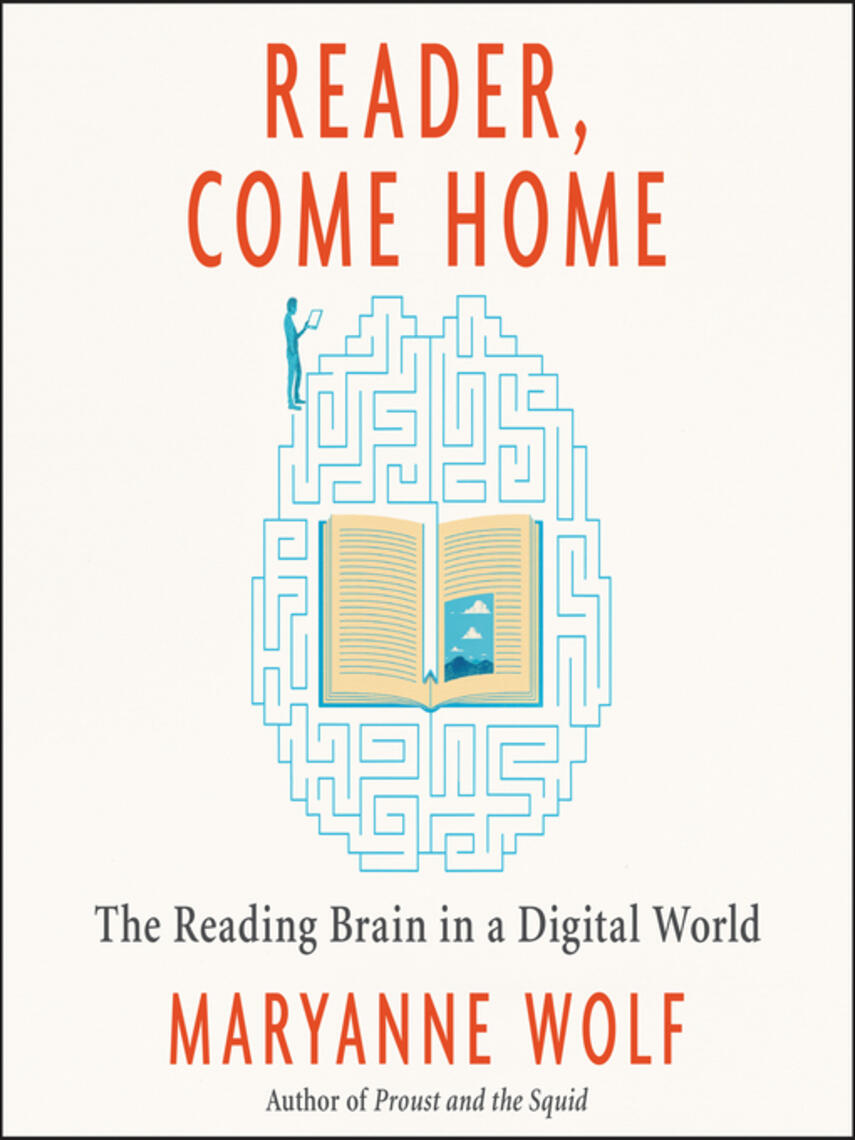
  • Reader, come home by Wolf

    Title: Reader Come Home: The Reading Brain In A Digital World

    Author: Maryanne Wolf

    Synopsis: Wolf examines the effect of digital devices and media on what she calls the ‘deep-reading brain,’ highlighting the detriments to attention, comprehension, memory, empathy, critical thinking, and reflection. To offset these effects, she advocates that educators and parents work towards developing a ‘biliterate brain’ in the younger generation that would allow children to become sophisticated readers across the mediums. The final chapters advocate the preservation of deep reading for the civic health of society and our species.

    My Take: This is a fantastic book that I had to read slowly in order to absorb a lot of Wolf’s finer points on deep literacy in our digital media. Part of my slow reading stemmed from self-consciousness. Wolf’s major point is that digital devices have rotted out our capacity for deep, close reading. So, after finishing a paragraph and realizing that my mind had wandered, I would castigate myself, “You clearly have no attention span! Go back and read that paragraph and this time REALLY read!” A similar feeling occurs when I read a book on mindfulness. How “mindful” should I be as I read this? If I go faster, does that mean that I’m not being mindful? Does just thinking about being mindful prevent me from being mindful? And around I go.

    But stepping back from my own reading experience, Wolf’s book will most likely inform you of new findings and research and also remind you of what you already know. For those interested in the neuroscience, Wolf devotes chapters on what is occurring in the brain during deep reading and how digital media may be short-circuiting this process. For the more pedagogically minded, she dives into how children become readers and how we can best help them arrive at what she calls a ‘biliterate brain.’ I also appreciated the several chapters she devoted to what are essentially ‘love letters’ to the deep reading process. “Reader Come Home” will inspire and motivate you to make deep reading a part of your life and those around you. That said, this is not necessarily and easy read. It is dense in some points and I feel it necessary to revisit this book to appreciate some of the points that I may have missed.

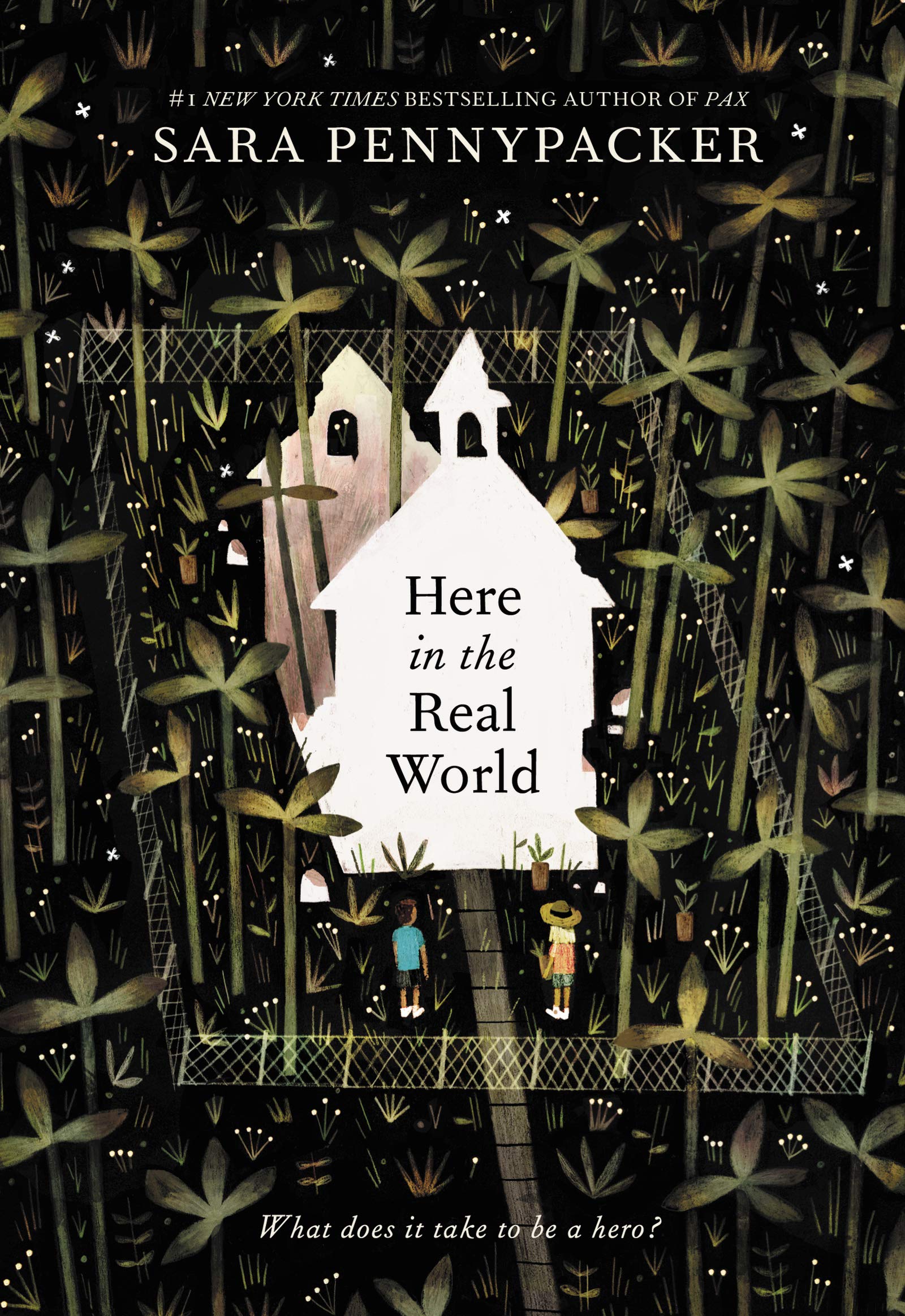
  • Here in the Real World

    Title: Here In The Real World

    Author: Sara Pennypacker

    Publication Date: 2020

    The Plot In 5 Sentences Or Less: 11 year old Ware seems to be in for another depressing summer hanging out at the Community Rec Center while his parents are at work. His plans change when he plays hooky and discovers a demoed church lot just over the chain link fence next to the rec center. There he meets a girl named Jolene who is planting a garden next to the church ruins. Ware spends the rest of the summer skipping out on the rec center and adding his own touches to the lot with Jolene. But the impending end of summer and an upcoming auction for the lot may spell the end for their special place.

    My Take: I thought that Pennypacker hit a home run with her novel Pax, so I was looking forward to reading this. Here In The Real World does not stand out the way that Pax does, but it is still an enjoyable read. I give credit to Pennypacker for staging the text in the 3rd person point of view. So many middle grade and teen books are written in the first person to capture the self-absorption of youth, that I find it refreshing when a book departs from this. Pennypacker is a deft writer and, while I would not characterize this book as especially plot driven, it did not feel like a slow read to me. She chose to keep the chapters short and punchy and this really drives the story forward. This is especially amazing to me, because this book is heavy on themes of rebirth, renewal, coming to terms with being different, first feelings of love, development of an artist, tension between generations, dealing with unfairness, the need for silence and being alone etc. Somehow Pennypacker guides the reader through all of this and yet the book feels well paced. That’s a pretty incredible feat for a writer.

    (Side note: This book really reminded me of My Jasper June, in that it introduced a rugged, carefree character to shake up the protagonist and add to their family.)

    Beyond that I would give this book 4 out of 5 stars. It is a solid addition to middle grade realistic fiction about young people finding themselves – which is really what every tween fiction book is about in the end.

    One Interesting Note About The Author: According to this interview with Publishers Weekly, when Pennypacker was writing the first Clementine book, she “overheard a conversation in which someone had recalled Carl Jung’s answer to a question. Jung had been asked, ‘Why is there evil in the world?’ And he answered, ‘There’s evil in the world when people can’t tell their stories.’” Frankly, I find this to be an incredibly inspiring quote to base your writing (and reading!) life around!

  • Mary Underwater by Shannon Doleski

    Title: Mary Underwater

    Author: Shannon Doleski

    Publication Date: 2020

    The Plot In Five Sentences Or Less: 13 year old Mary Murphy lives on an island that borders the Chesapeake Bay. Her father is home from prison and as a result, her life at home has become much more unsettled. One bright spot is that she seems to be growing closer to her friend Kip as they work on a science project together. As her father demonstrates increasingly violent behavior, Mary strikes upon a way to focus her scientific mind on a project that will take her off the island: building a submarine.

    My Take: I thought that this was a strong debut from author Shannon Doleski. The story is straight forward and the theme of female empowerment is conventional, but Doleski does not waste the reader’s time. At no point does the narrative bog down in heavy description or indulge in extraneous side stories. This is Mary’s story of coming into her intellectual powers and experiencing love for the first time and that is enough. I also found the basic mechanics behind submersibles to be fascinating. Due to the love interest, I found this to be more of a tween than juvenile selection.

    One Interesting Note About The Author: According to her website, Shannon Doleski curses too much.