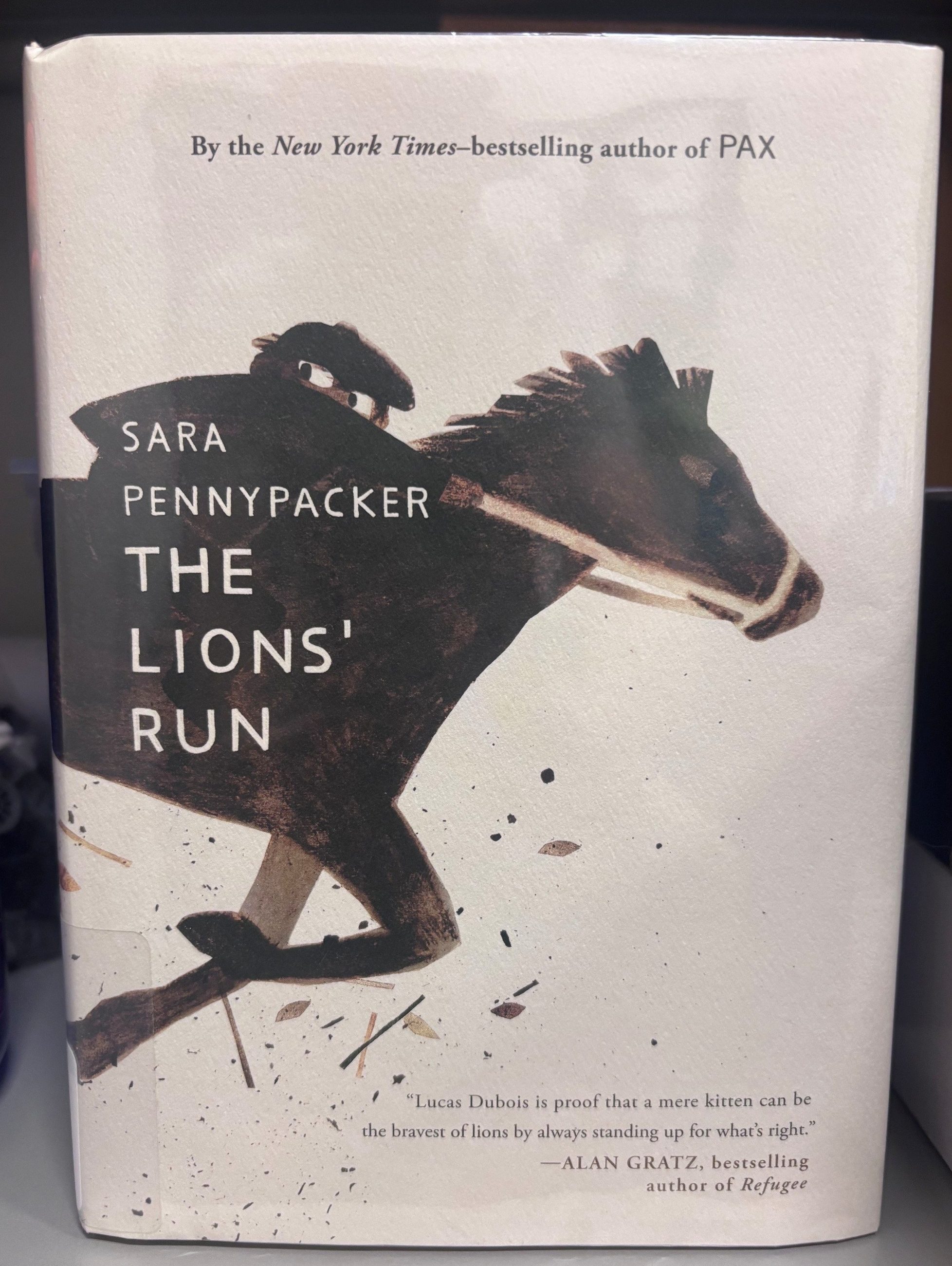
Lucas is an orphan living in a town suffering under the twilight of occupied France in the spring of 1944. His role as delivery boy requires that he visit the Lebensborn, a Nazi-run maternity home where infants are separated from their mothers to be sent to Germany to serve the Reich. As Lucas uncovers the horror of this system, he also befriends a girl named Alice who nurses her own grudge against the Nazis. Alice has been hiding her prize racehorse, hoping that it will not fall into enemy hands. Together Lucas and Alice search for ways to save what means so much to them and their community.
Pennypacker has gifted us a sturdy book, one that examines the endurance of sensitivity and empathy in the face of systemic violence. The opening scene highlights Lucas’s concern for the vulnerable as he rescues a bag of kittens from the local bullies – a scene that is revisited on a larger scale as Lucas and Alice pushback against the Nazi occupation. Throughout the story, Pennypacker highlights the antidotes to systematic cruelty: the innocence of children, the beauty of animals, the communal bonds of the town, and the bravery of its citizens. These, Pennypacker tells us, are what will save us in the end.
Two close friends of mine who read The Lions Run felt that the ending required more workshopping. I sympathize with that criticism, but for me it was not a deal breaker. Pennypacker finds a way to ratchet up the intensity in the final acts – a decision that asks for a fuller climax and resolution. Despite this, I would recommend The Lions Run for anyone looking for good historical fiction, especially that involves horses.


Leave a Reply