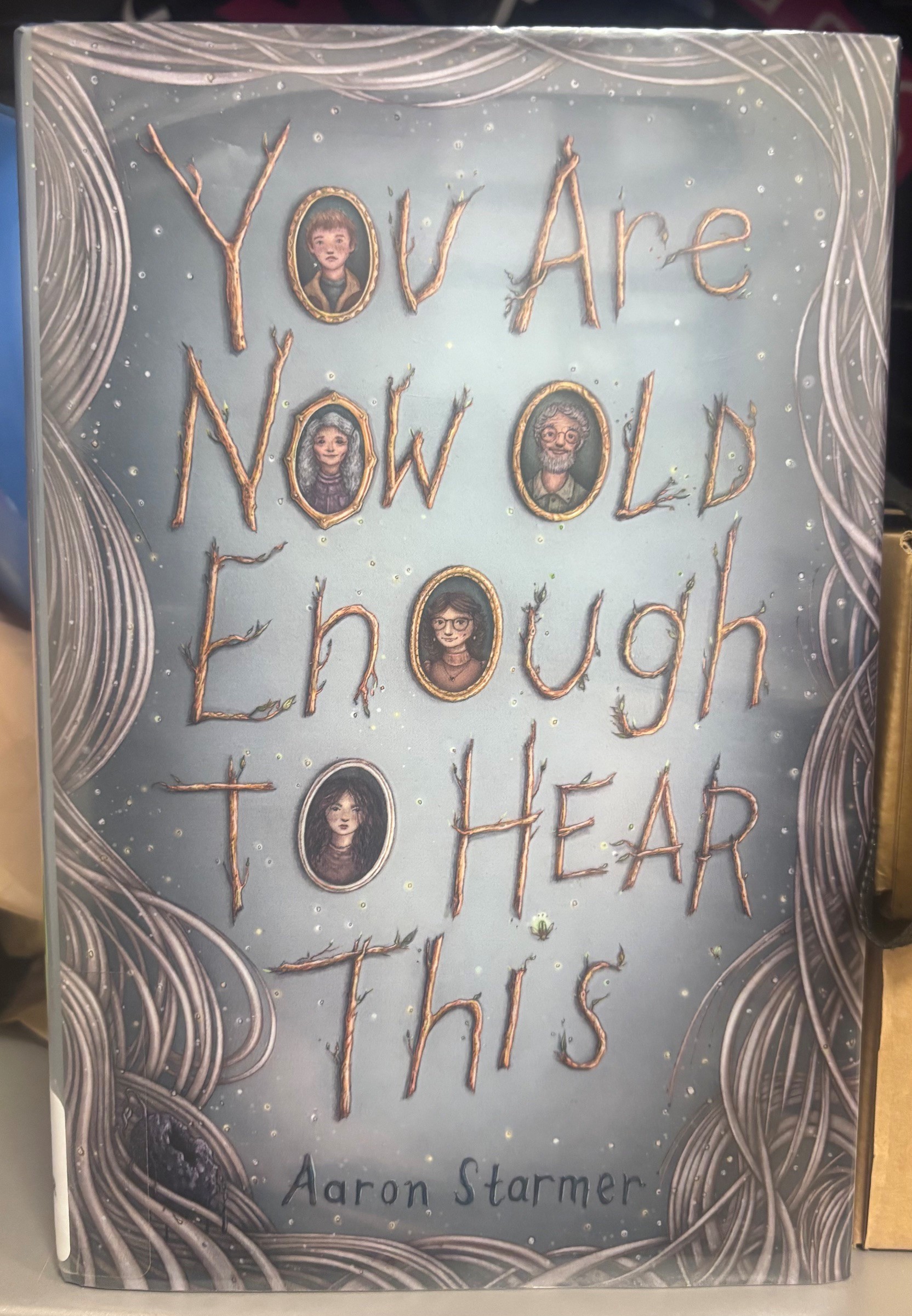
• Cover of the book "You Are Now Old Enough To Hear This"

    As the youngest in the family, Roman had always heard his Grandfather Henry talk about the Toe Beast, but he figured that it was just an old story meant to scare children. When his grandfather passes, Roman spends his summer days cleaning out the old man’s house.  There Roman begins to find evidence that the Toe Beast story was but a small part of a much bigger family mystery that will go deeper than Roman ever could have imagined.

    3 out of 5 stars for me.  You Are Now Old Enough To Hear This sustained narrative momentum through perhaps 3/4 of the story.  I appreciated the spooky beginning of the book and also enjoyed the sharp turn towards mystery as Roman uncovered more information about his family. At some point, however, after enough twisty back-and-forths, I became less enamored with it all. Intergenerational timelines and characters multiplied and I begin to feel the author apply a heavy hand to make it all fit together.  By the end I found myself not caring about the fate of the different family members – Starmer had done little to introduce them to the reader.

    Still, there is a strangeness to this book that will appeal to some readers. Starmer keeps you guessing through most of the story and resists a straightforward narrative.  Recommend this to someone looking for a mystery with a little spookiness.

  • Lucas is an orphan living in a town suffering under the twilight of occupied France in the spring of 1944. His role as delivery boy requires that he visit the Lebensborn, a Nazi-run maternity home where infants are separated from their mothers to be sent to Germany to serve the Reich. As Lucas uncovers the horror of this system, he also befriends a girl named Alice who nurses her own grudge against the Nazis. Alice has been hiding her prize racehorse, hoping that it will not fall into enemy hands. Together Lucas and Alice search for ways to save what means so much to them and their community.

    Pennypacker has gifted us a sturdy book, one that examines the endurance of sensitivity and empathy in the face of systemic violence. The opening scene highlights Lucas’s concern for the vulnerable as he rescues a bag of kittens from the local bullies – a scene that is revisited on a larger scale as Lucas and Alice pushback against the Nazi occupation. Throughout the story, Pennypacker highlights the antidotes to systematic cruelty: the innocence of children, the beauty of animals, the communal bonds of the town, and the bravery of its citizens. These, Pennypacker tells us, are what will save us in the end.

    Two close friends of mine who read The Lions Run felt that the ending required more workshopping. I sympathize with that criticism, but for me it was not a deal breaker. Pennypacker finds a way to ratchet up the intensity in the final acts – a decision that asks for a fuller climax and resolution. Despite this, I would recommend The Lions Run for anyone looking for good historical fiction, especially that involves horses.

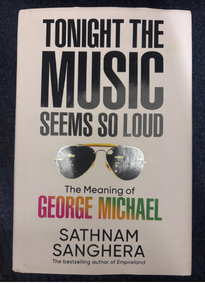
  • Cover of the book Tonight The Music Seems So Loud

    Sathnam Sanghera’s Tonight The Music Seems So Loud: The Meaning of George Michael will land with a narrow audience of the pop star’s aficionados. Rather than a straight recounting of the musician’s life – a lacuna ably filled by James Gavin’s 2022 biography – author Sathnam Sanghera structures his text around major aspects of the musician. Each chapter serves to explore a general theme: Michael’s controlling approach to his craft, his sexuality in a repressive time, the crush and cruelty of fame, his scandals and substance abuse, an assessment of his genius, etc.

    Certainly, a general audience reading this book will engage in some eye rolling and skimming, but those with a strong allegiance to George Michael’s work will find enjoyment in these pages. Sanghera takes frequent asides to explore his self-conscious experience as a George Michael fan. Some may find this distracting, but as a fellow fan around the same age as Sanghera, I appreciated the author’s self-reflexivity. When the author states that as a teenager, he appreciated Michael because “unlike most men in my life, he didn’t seem allergic to expressing actual feelings,” this illuminated and reflected my own sentiments about the pop star. 9 years old when the Faith album dropped, I moved into my teen years and clung to songs like “Father Figure” and “One More Time” – songs that expressed a yearning and heartache often absent from the work of other male pop performers.

    Sanghera admits that researching and writing this book was intended as a break from earlier projects that delved into heavy topics. His love for Michael’s work, no matter how tempered by middle age and self-consciousness, show through in this text and will please sympathetic readers. Most fans will appreciate this deep deconstruction of George Michael’s life and work and welcome it in the canon about the pop star.

    Sanghera, Sathnam. Tonight the Music Seems So Loud. Pegasus Books, 2026.

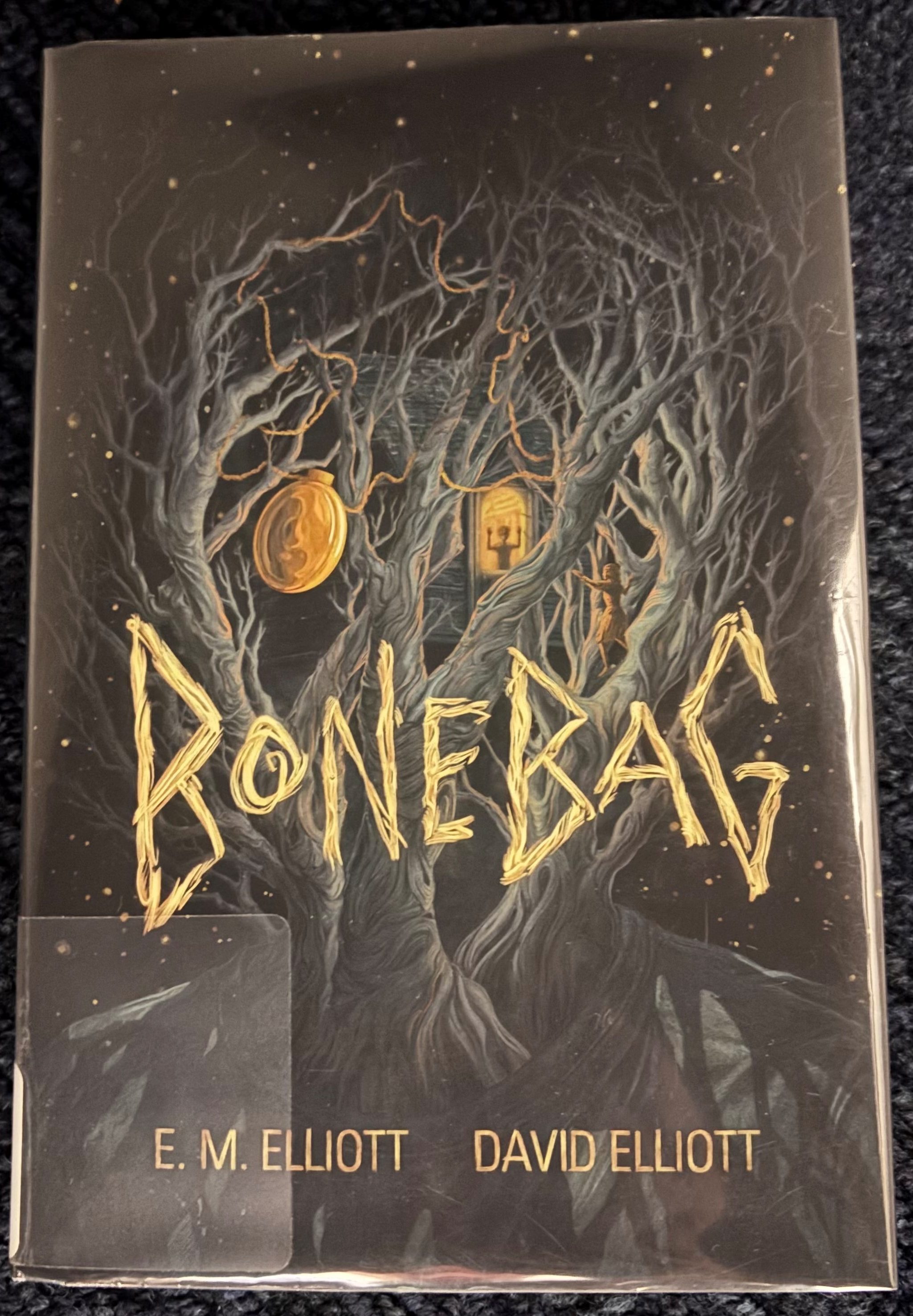
  • Bonebag lives in the dark forest of the Scura min Scurse with his guardians Modor and Faeder. He has never known anyone else until a strange girl appears at the edge of the woods, beckoning him to follow her. Meanwhile his guardians are showing unsettling changes in their physical forms, dropping shimmery moonthings from their bodies. Bonebag manages to escape the Sura min Surse, but his new environment is no less bewildering. Joining a ragtag clan of orphaned children, Bonebag seeks to track down his birth parents and face the ultimate evil from the Scura.

    Bonebag is a title that will appeal to readers who like tales from the darker side. The father and son authors David and E.M. Elliott have set their story in dark, dystopian landscapes that are reminiscent of Neil Gaiman’s work. Readers will enjoy following the characters of Bonebag and his friends as they struggle against the many perils of their lives, seeking to uncover the mysteries of their worlds and attain the serenity of a place to call home.

    Elliott, David and E. M. Elliott. Bonebag. Astra Young Readers, 2026, New York.

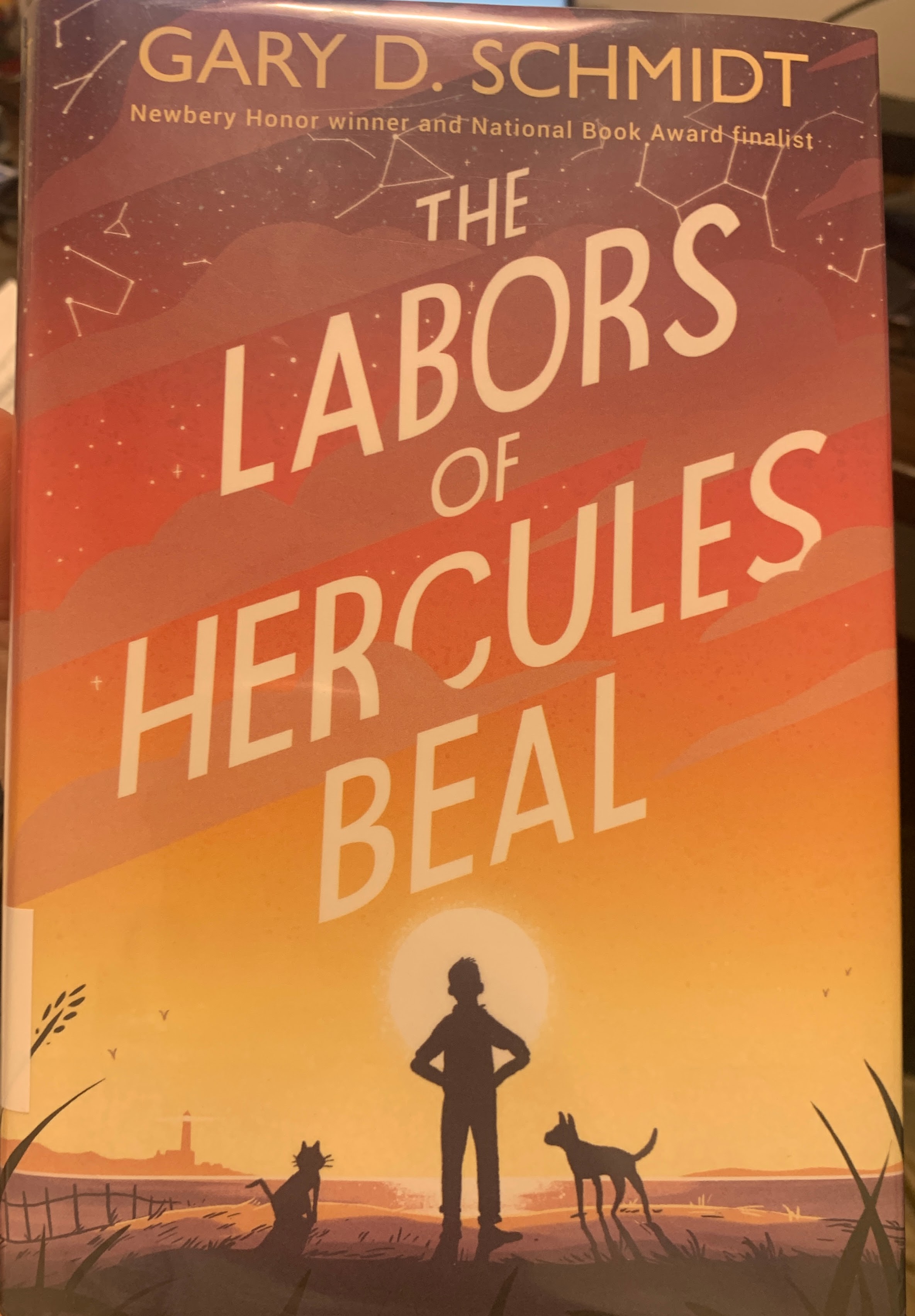
  • Publication Info: 2023 by Clarion Books (imprint of Harper Collins)

    Author: Gary D. Schmidt

    Title: The Labors Of Hercules Beal

    The Plot In Five Sentences Or Less: Hercules Beal is a 7th grader living on Cape Cod whose parents died the previous year in an auto accident. At school, his eccentric teacher Mr. Hupfer assigns him an interesting classical mythology project: he must perform the 12 labors of Hercules in his own life and reflect on the meaning of the stories. From scaring off feral cats to painting trees, Hercules does his best to complete the labors as he understands them all while dealing with his grief.

    My Take: I loved the premise of this book. The mythical Hercules performed the labors to work through the grief of the death of his family, just as Hercules Beal must do concerning the death of his parents. The 12 labors guide much of the narrative framework and proves interesting through much of the book. But 12 is a large number for a story and events begin to feel a bit repetitious after a while. Perhaps the author could have narrowed down to the top five labors and focused on those. Still, this book is an excellent choice for those looking for a title on how middle schoolers process grief.

    One Interesting Note About The Author: Schmidt has won two Newbery Honors for Lizzie Bright And The Buckminster Boy and The Wednesday Wars.

  • Synopsis: Preschool aged program based on Crockett Johnson’s 1955 book Harold And The Purple Crayon.

    Budget: Less than $50

    Supplies: Basic craft supplies including: Construction paper, toilet paper tubes, googly eyes, large roll of white paper

    Directions: We set up several stations in our Children’s Department. We opened the program with a reading of Harold And The Purple Crayon. Children and parents were then free to move from station to station at their own pace.

    Station 1: Purple shape art. Children could place basic, pre-cut shapes, onto a black piece of construction paper to create imaginative scenes.

    Station 2: Create your own story in a book. We handmade many small books out of construction and art paper, even using twine for the binding. I referenced this video for the binding. Children were invited to write and illustrate their stories on the inside. They could also paste pre-printed name plates on the front of the book. This station was meant mainly as a take away activity.

    Station 3: Create A Group Story. We hung large pieces of white paper on a wall and on the floor. Children could use purple paint to decorate and create whatever they wanted. It was interesting to see the final large scale masterpiece at the end of the program.

    Station 4: Make A Purple Crayon. This one was pretty on the nose, but children enjoyed the activity. I found instructions for this activity here: https://www.thebestideasforkids.com/toilet-paper-roll-crayons/

    Conclusion: This program was well received by young people. The variety of crafts and allowing everyone to self direct proved to be a good choice. I am proud that we were able to bring the community together to celebrate a children’s book published 78 years ago.

  • Title: The Last Mapmaker

    Author: Christina Soontornvat

    Publication Info: 2022 Candlewick Press

    The Plot: Sai lives in the kingdom of Mangkon and works as an assistant to the famous mapmaker Paiyoon Wongyai.  Unbeknownst to her master, Sai comes from the troubled underclass of Mangkon society and has little room for advancement in life.  When the Queen of Mangkon announces a voyage to map the unknown lands of the southern ocean, Paiyoon and Sai find themselves part of this dangerous expedition.  Sai hopes that this maritime adventure will be her way to a better life, but she must keep her true identity guarded even as she comes to question the true intentions of the voyage.   

    My Take: With a light does of fantasy and adventure, Soontornvat paces this novel in such a way that it sweeps the reader along with Sai in her dangerous journey.  Soontornvat also does an excellent job presenting the complicated questions of advancement in a morally compromised society. Recommended for ages 11-14

    One Interesting Note About The Author:  According to her website, Soontornvat “spent a decade working in the science museum field, where she designed programs and exhibits to get kids excited about science.”  She is passionate about STEM. 

  • Synopsis: Using basic materials, children crafted small boats that actually float.

    Prep Time: If you have the materials on hand, prep time is pretty negligible.

    Budget: Around $20 – $40 depending on how many materials you would like to include

    Supplies Needed:

    Styrofoam

    toothpicks or popsicle sticks or some type of small wooden dowels (these will serve as your nails to connect Styrofoam together)

    craft foam material

    kiddie pool or some type of large container to hold water

    chenille sticks

    box fan

    sponges (optional)

    aluminum foil (optional)

    rubber duckiees (opitonal)

    Other craft supplies as desired

    Directions:

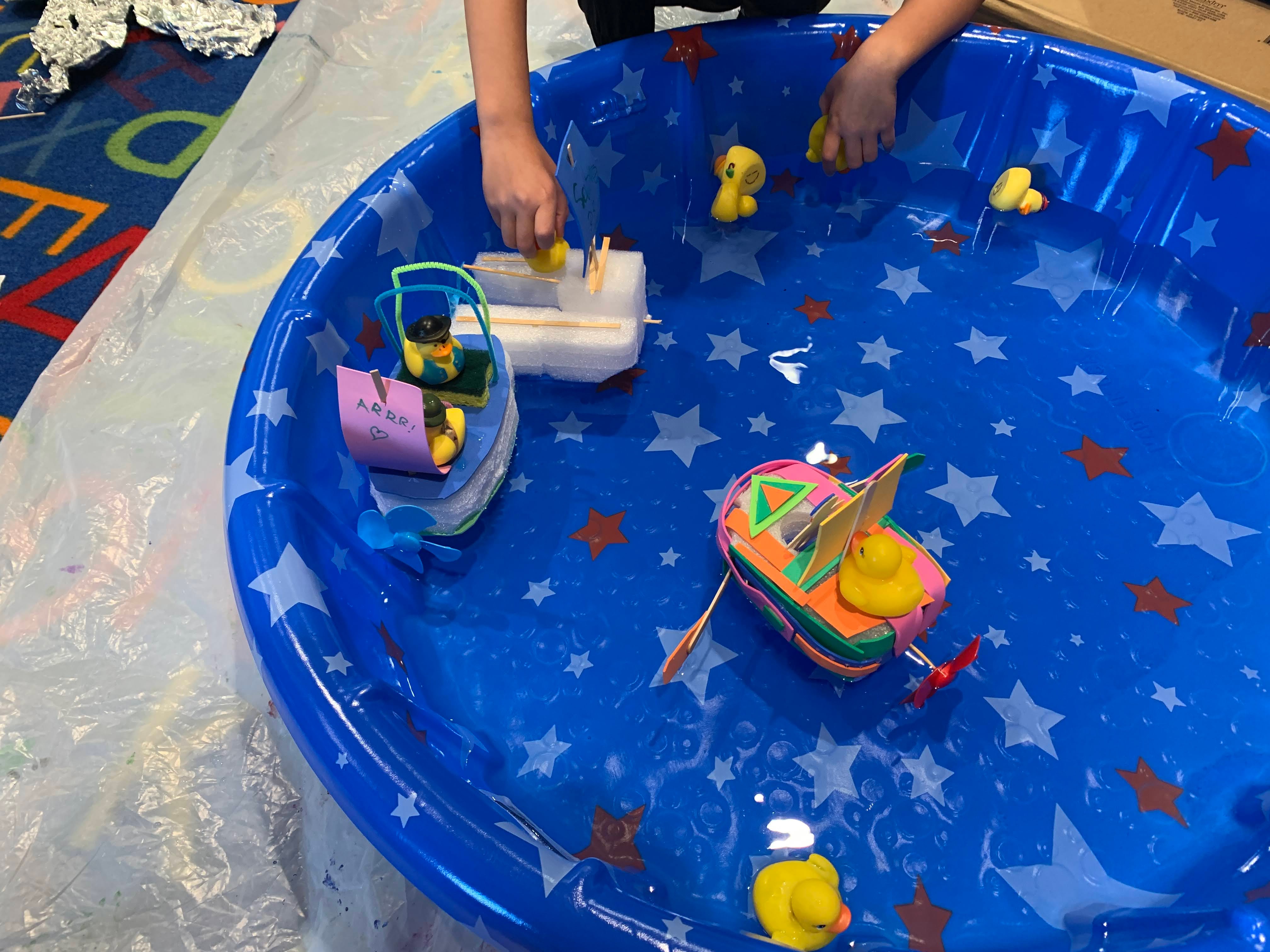
    This is the type of program that I truly enjoy running, because the children can dive right in from the beginning and begin to tinker and play. Preparation for the program was gathering the materials and placing them out for the children to use. I also filled up two kiddie pools with water. The building blocks for the program were large pieces of Styrofoam (whenever I hear of anyone tossing out a large amount of Styrofoam, I try to snag it because I know that I’ll eventually use if for a library program.).

    I did build a couple of boats ahead of time to give children some ideas of what they could create. I showed them how to connect blocks of Styrofoam together using popsicle sticks and tooth picks as ‘nails.’ I also demonstrated how to construct a ‘sail’ using pieces of craft foam and turned on the fan to show how it would push the boat across the water.

    The children took over from there and, as you can see from the pictures, they came up with some fantastic boats!

  • Title: Hello, Universe

    Author: Erin Entrada Kelly

    Publication Information: 2017 by Greenwillow Books/Harper Collins

    The Plot: Virgil Salinas is a shy boy who is overshadowed by his older brothers and pushed around by the neighborhood bully Chet. He longs to talk to the pretty girl in school Valencia Somerset. To overcome his shyness, he seeks the help of local child psychic Kaori Tanaka and her sister Gen. When an accident occurs, Virgil must rely on the team of Valencia, Kaori, and Gen to help him.

    My Take: This Newbery Medal winner has gentle characters and a straightforward plot but lacks narrative momentum. Even a major accident that befalls the main character does not stir enough urgency into the plot. Erin Entrada Kelly definitely surpassed this work with her more recent novel Lalani And The Distant Sea. For those looking for a middle grade realistic fiction, I would recommend other titles.

    One Interesting Note About The Author: According to her website, Erin Entrada Kelly is of mixed Philippine descent. She was raised in a household in which people spoke the Philippine dialect Cebuano (as opposed to Tagalog).

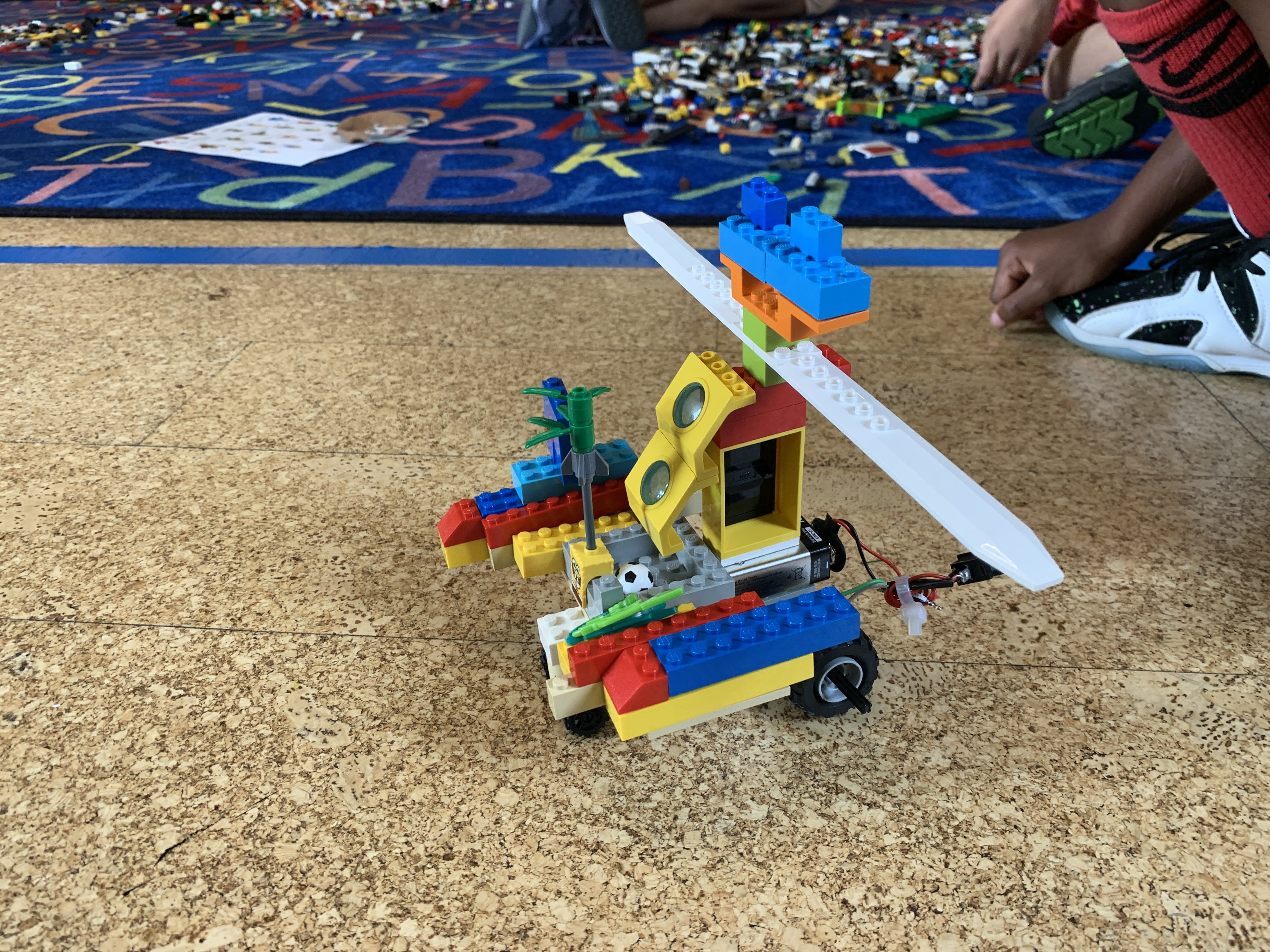
  • Synopsis: We built motorized LEGO cars powered by small DC motors and 9 volt batteries.

    Age Group: Elementary Aged

    Prep time: several hours

    Budget: around $50 for a program with 12 children attending

    Supplies needed:

    small DC motors with gear boxes

    9 volt batteries

    small switches

    9 volt battery clip connectors

    3D printed axels (to connect gearbox to LEGO axel)

    Lots of LEGOs (especially wheels and axels)

    Soldering tool

    glue dots

    Directions:

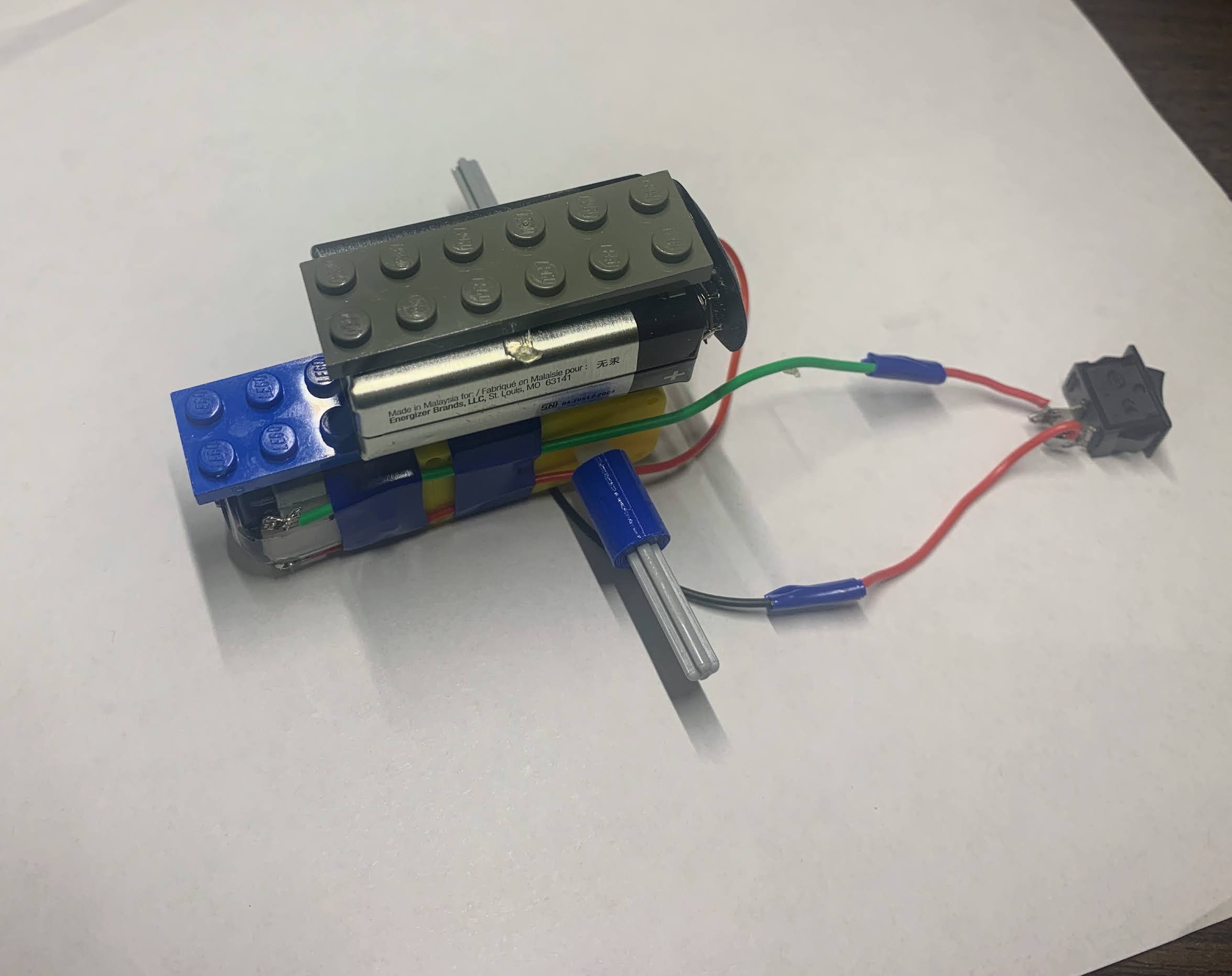
    I wired and soldered all of the electronics ahead of time, because this process is not safe for children. Begin by soldering the wires to the motor leads. Then solder one motor wire to a lead on the switch. Solder another motor wire to the battery clip connector. Solder the other wire from the battery clip connector to the other switch lead. Refer to the picture for the final result.

    Next insert your 3D printed axels (mine are blue in the picture) onto your gearbox axels. Then insert LEGO axels into your 3D printed axels. Connect the 9 volt battery and turn on the switch to see if it all works. Refer to the picture for reference.

    Now use glue dots to place a couple of LEGO pieces on top of the gearbox, on top of the battery, etc. These LEGO pieces will serve as the starting point for kids to build and connect other LEGO pieces to make their car. Also make sure to use glue dots to position the battery. Refer to the picture for my final outcome. Yours may look a little different and that’s fine.

    When the program began, I placed all of the wired motors and batteries on a table, so that children could grab one and get building.

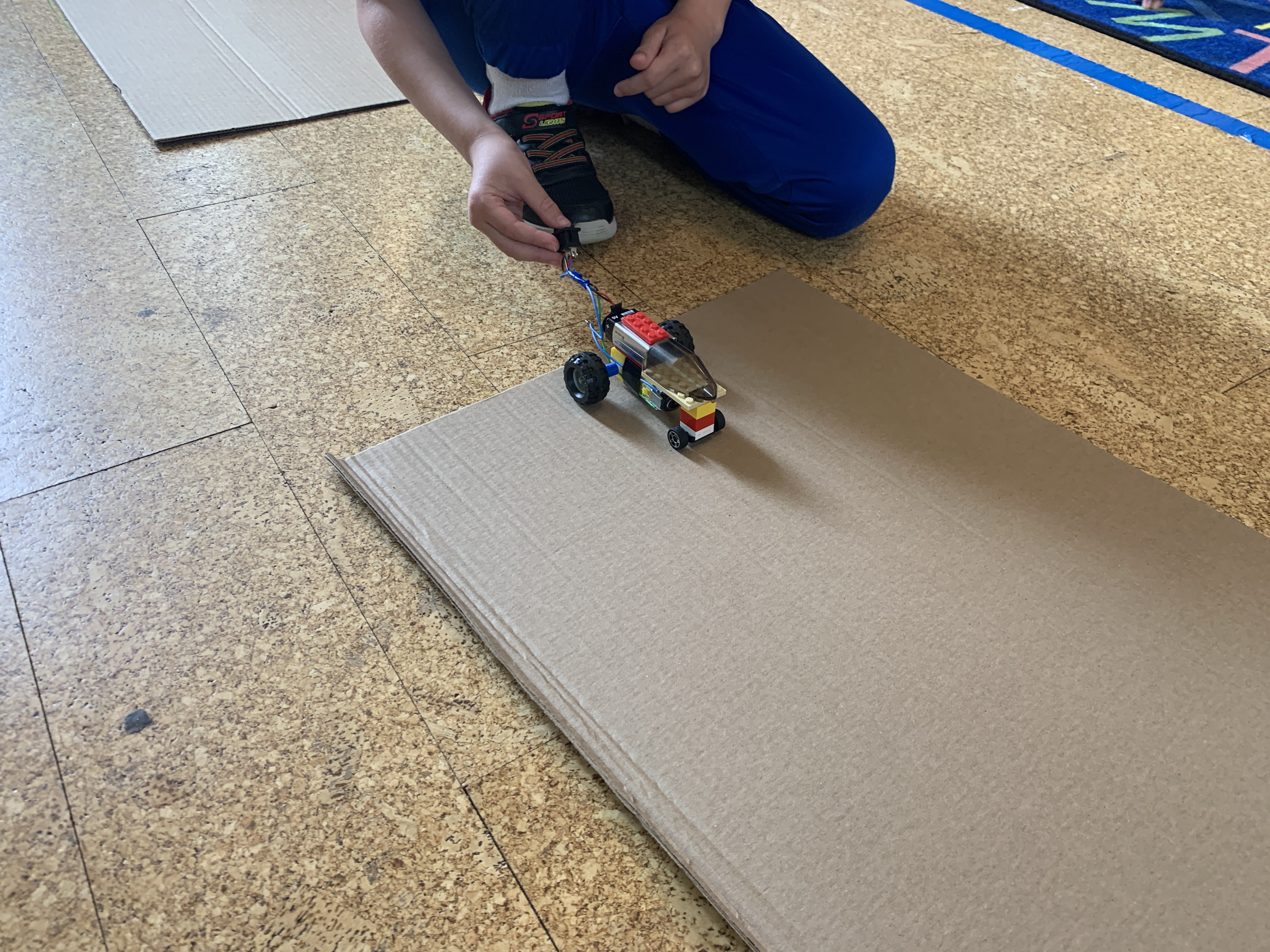
    Encourage children to be as creative as they want. Many of the kids in my program built some interesting looking cars! We even set up some ramps using cardboard and wooden blocks, which was a big hit.

    Conclusion: This program was a hit. I would grade it as a B+/A- based on the enthusiasm and interest level of the children. I allowed each child to take their pre-wired motor, battery, gearbox, etc. so that they could continue to build at home. The only downside of this program is the expense of materials and the time spent soldering, 3D printing, and putting things together.